


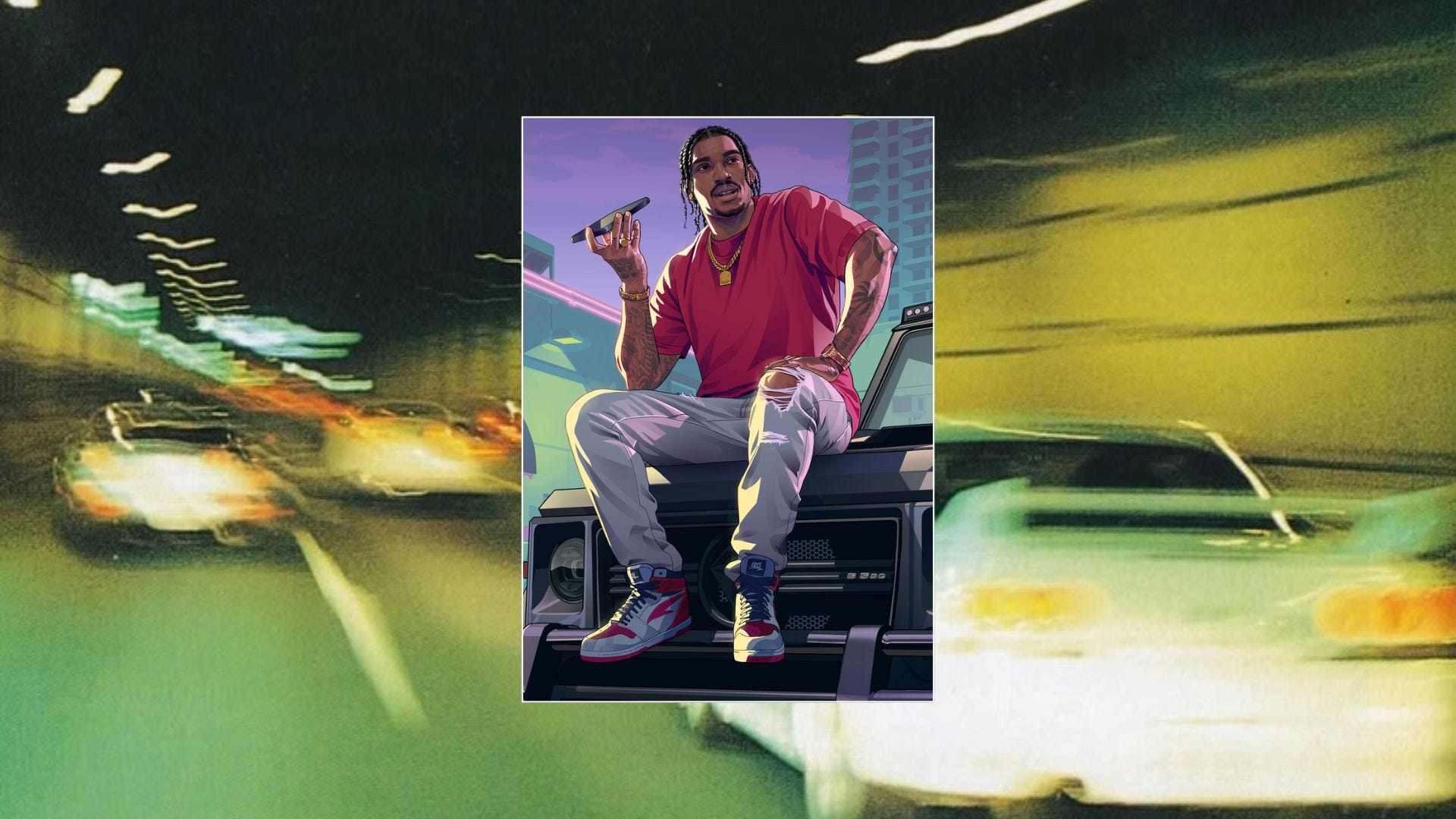
For this guest post we welcome Jordan Willis from Active Materials. He has spoken with Robbie Russell, Marketing Lead at Apple Music and Thierry Phung, Creative at NTS Radio about the music of GTA VI.
It’s easy to look at GTA VI and call it pure nostalgia.
Vice City, Rockstar’s take on Miami, is back. First appearing in 1997 (Grand Theft Auto) and immortalised in 2002 (GTA Vice City), it’s once again serving neon, palm trees, waterfront excess and Art Deco hotels. You can practically smell the burnt rubber from a five-star wanted level car chase from here.
But listen to GTA VI, and things start behaving differently.
On the official soundtrack album, Keith Richards covers a 1961 Jimmy Reed blues a few tracks away from Fred again.. and PinkPantheress. Different generations, different musical worlds, sharing the same tracklist.
Move to the in-game radio and the collisions keep coming. Miami rap royalty Trick Daddy and Trina, whose real-life morning show ended in 2021, are back on air hosting Dirty South Classics. Elsewhere, modern pop stars like Lana Del Rey introduce late icons like Loretta Lynn. The past, present and future blur into an experience that belongs to no single generation.
The familiar parts might all be there. But they’ve been stitched together to form a new monster. This isn’t nostalgia as we know it. GTA VI has created frankenostalgia.
And you can hear its electrical pulse well beyond Vice City.
It’s indicative of a culture increasingly making something new from several pasts at once.
What the devil is Frankenostalgia?
Frankenostalgia is what happens when different eras share a body. Familiar references, unexpected combinations, a cultural creature with no obvious origin. “It’s about creating a dialogue with the past to say something about the present,” says Russell.
Like Mary Shelley’s creature, it’s made from old parts, but once “it’s alive!”, it’s something new.
It’s about recalibration, not revival. The past doesn’t come back, it gets rewired for now.
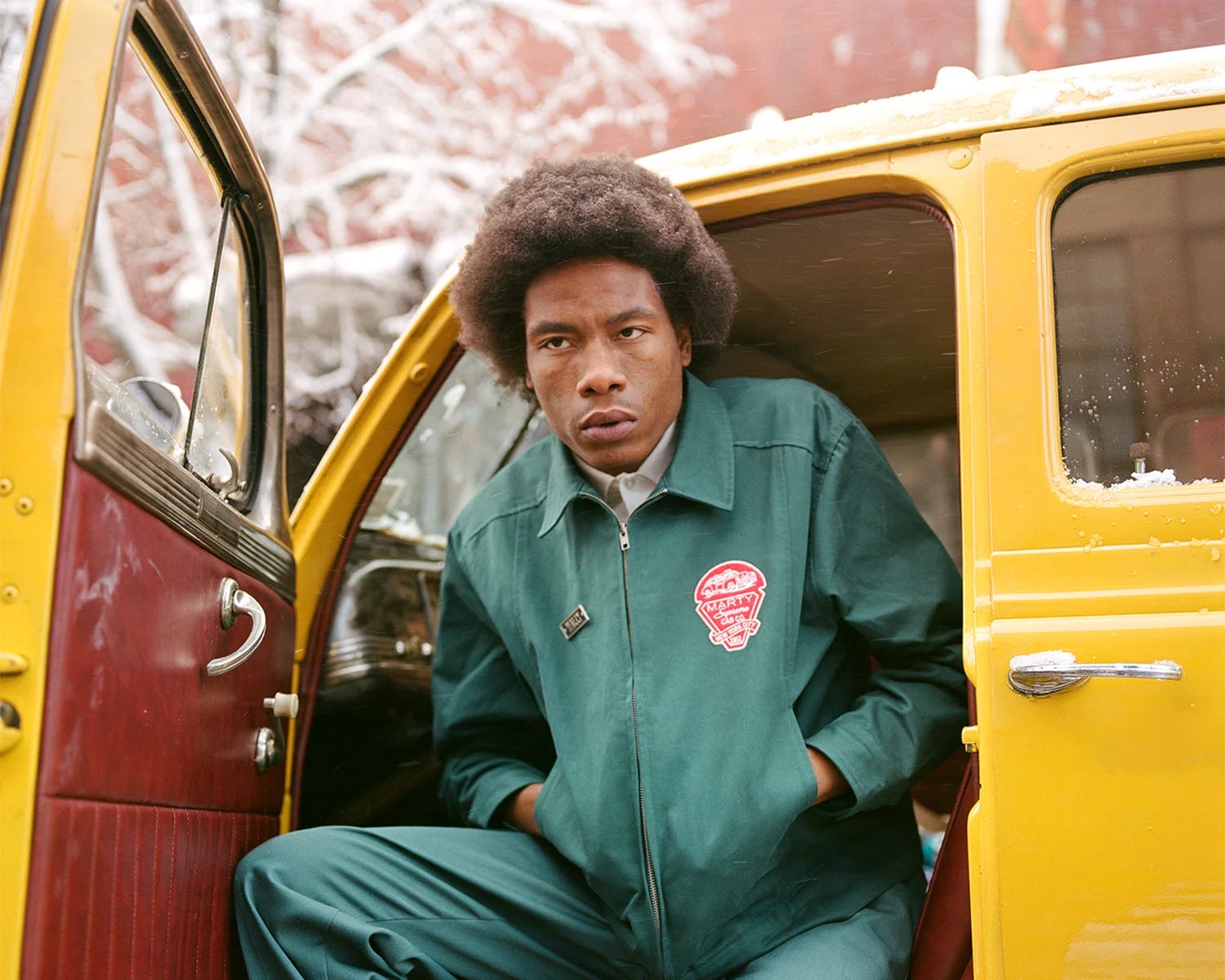
Look at Marty Supreme. Josh Safdie’s film is set in 1950s New York, but it sounds like the 80s: Tears for Fears and New Order on the soundtrack, and a Daniel Lopatin score that accentuates those early-80s synths. Then it ran off screen into streetwear, where much-hyped collaborations with NAHMIAS track jackets and a 1950s-inspired Golf Wang capsule from Tyler, the Creator caught the attention of many crazed-Timmy fans. A 50s story, an 80s soundtrack, a very 2025 merch drop. Three eras, one shared body. “For all of the painstaking period detail in the film, the choice of tunes stuck out to some viewers as anachronistic to what they were seeing. It was era-smashing with artistic intent,” says Russell.
Harry Styles is one of the clearest examples in pop right now. On “Dance No More”, a Chic-style disco bassline sits under Prince-style guitars, with nods to Simon & Garfunkel and Paul Simon’s “You Can Call Me Al”, all moving like a Fred again.. track. 70s disco, 80s Graceland and 2020s club music, stitched into something that only sounds like now. Even his tour support is in on it: Fcukers, and Robyn.
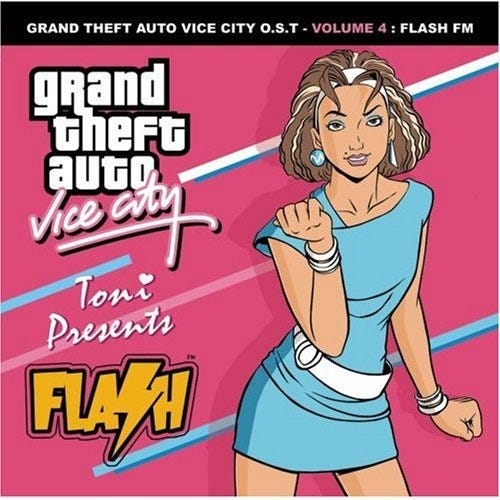
The same Robyn now hosting Flash FM on GTA VI.
Why is GTA VI using Frankenostalgia?
Rockstar had no other choice.
GTA Vice City’s (2002) music was a purer representation of the past, because it could be.
Set in 1986, its stations were a syllabus for 80s culture: Flash FM for synth-pop, Wave 103 for new wave, Emotion 98.3 for power ballads. “Games (like GTA) were how I experienced the world. They make you romanticise places and eras you’ve never actually been to,” says Phung. For players born after the 80s, Vice City offered their first taste of Tears for Fears or The Human League. One decade, played straight. This made sense for a game born before the music streaming era, when discovering gems still depended on what you could get your hands on. Vice City handed players a ready-made record collection, with a stolen car to listen to it in.
GTA VI goes further, because it has to.
Today, every musical decade is a few taps away. Players arrive with playlists that already put their parents’ teenage anthems next to songs released last Friday. Their listening habits don’t stay in one era. Why should GTA VI’s?
Then there’s the audience itself. GTA VI might be the most cross-generational game ever made.
Millennials who played Vice City, Gen Z who grew up on GTA V, and a Gen Alpha who knows Los Santos from YouTube clips all want in. One decade can’t hold them. So every station is a stitch to the bigger frankenostalgia monster. Bad Bunny’s Cocoteo FM sets reggaeton next to bachata and merengue. Burna Boy and Palms Trax put Asake beside Ghanaian highlife greats Pat Thomas and Ebo Taylor.
There’s nowhere better to do this than Miami, a city where streamer mansions sit next to old strip clubs, which sit next to pop-up galleries at Art Basel. Miami is frankenostalgia in city form
What Does Frankenostalgia Mean For GTA’s Legacy?
Frankenostalgia is what will make GTA VI last.
GTA V lasted for thirteen years, and a big part of that was because of its ever updating musical experience roster. Frank Ocean’s Blonded radio arrived four years after launch. Dr. Dre premiered six new tracks inside GTA Online in 2021. Moodymann and Palms Trax hosted club nights.
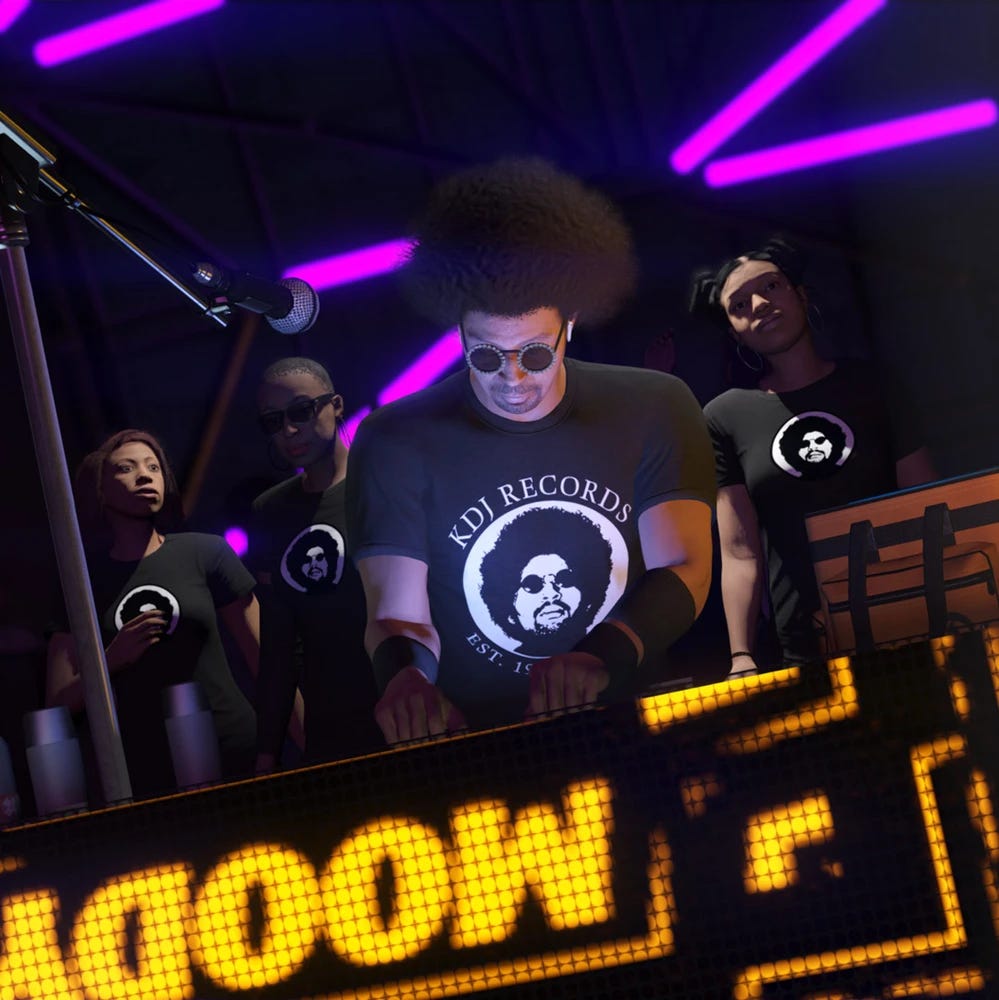
“GTA’s whole ethos is doing things that the people who built the world enjoy, often to the most extreme scale,”says Russell. GTA VI needs to take this to the next level.
We’ve seen festivals, album drops, club nights, what will GTA VI bring that we haven’t seen? We’re getting GTA VI The Festival and GTA VI x NTS Radio takeovers - but what else is there?
The opportunity is to make its musical world change with the people living in it, and that can only reveal itself through gameplay over time. “They need to treat the radio stations like real, living community radio - constantly updating them with underground scenes and internet micro-genres,” says Phung.
GTA VI is already setting itself up for success by not sitting firmly in one era with its music. Frankenostalgia becomes a future proofing strategy. In a culture moving this fast, few of us have the time or attention to make something from scratch.
So we stitch.