

This is an original story featured in Kepler Interactive’s RESET magazine. Check it out here! If you would like the TL:DR - then check that out here.
“Do you think people will ever try and copy the looks of their gaming avatars?”
Before you think to yourself “Yeah that’s cosplay…idiot.” Indulge me.
It’s a question I asked Dani Loftus of This Outfit Doesn’t Exist and Ellen Atlanta, author of Pixel Flesh one warm evening at Somerset House back in 2025. They’d just finished a talk on the evolution of beauty in a post-internet world, the porous border between face and filter, skin and screen.
After some discussion, it was clear. Video game looks are already everywhere on a mainstream level.
Grown ass men have painted their faces in block form, hoisting pixelated swords and throwing popcorn all over the cinema during Minecraft: The Movie. Super Mario costumes are everywhere from stag doo’s to five year old birthday parties. Then of course - there’s legitimate cosplay communities. You’ll find them at fan conventions, on Twitch streams and not to mention, a little day every year called Halloween…
But the real shift isn’t in the literal recreations. It’s in the mutations.
Cosplay used to be about replication. An act of devotion. Now, it’s about translation. Yes, one could take 350 hours to recreate Moxxi from Borderlands 3 and rock up to Gamescom - and hats off to them. But what about taking the cel shading style of Borderlands and converting it into your own look?
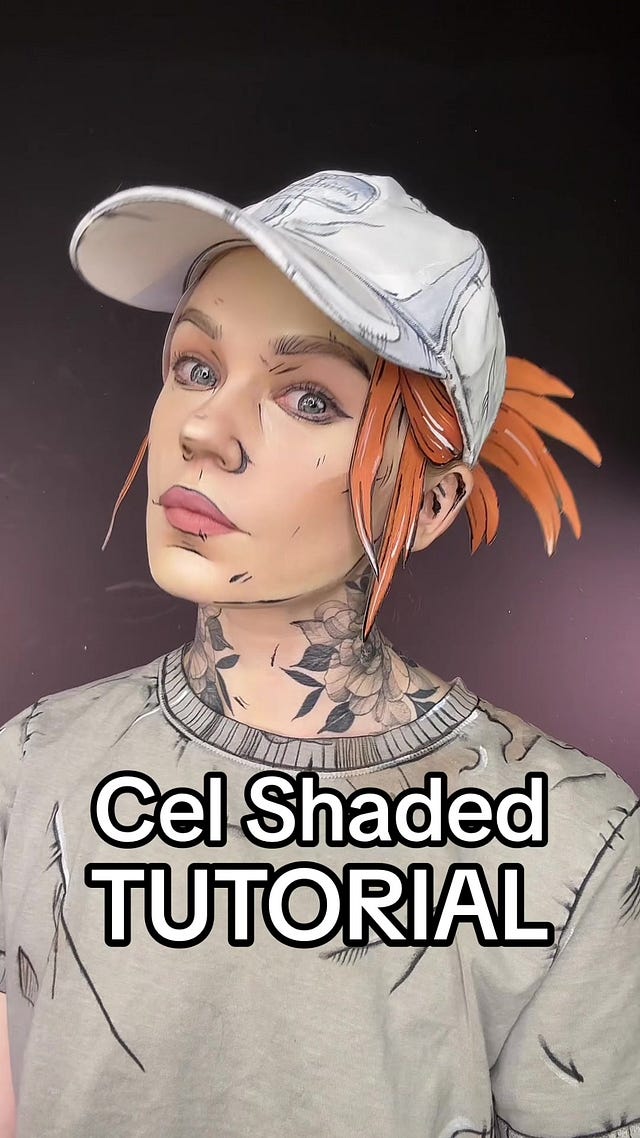
 Tiktok failed to load.
Enable 3rd party cookies or use another browser
We’ve entered The Age of Codified Cosplay, where the goal isn’t to become your favourite character but to borrow the aesthetic code — the shader, the silhouette, the glint in the lighting — and remix it into your own reflection.
This translates into a fashion point of view as well. A recent study by virtual-to-reality fashion brand Mutani, found that 83% of their community is buying gaming inspired fashion to wear at home which now eclipses the 77% that are buying gaming inspired fashion for conventions. Moreover, 47% have bought accessories that relate to gaming (i.e. bags, sunglasses) – showing that more and more people are encoding the details of gaming into their looks rather than the full outfit.
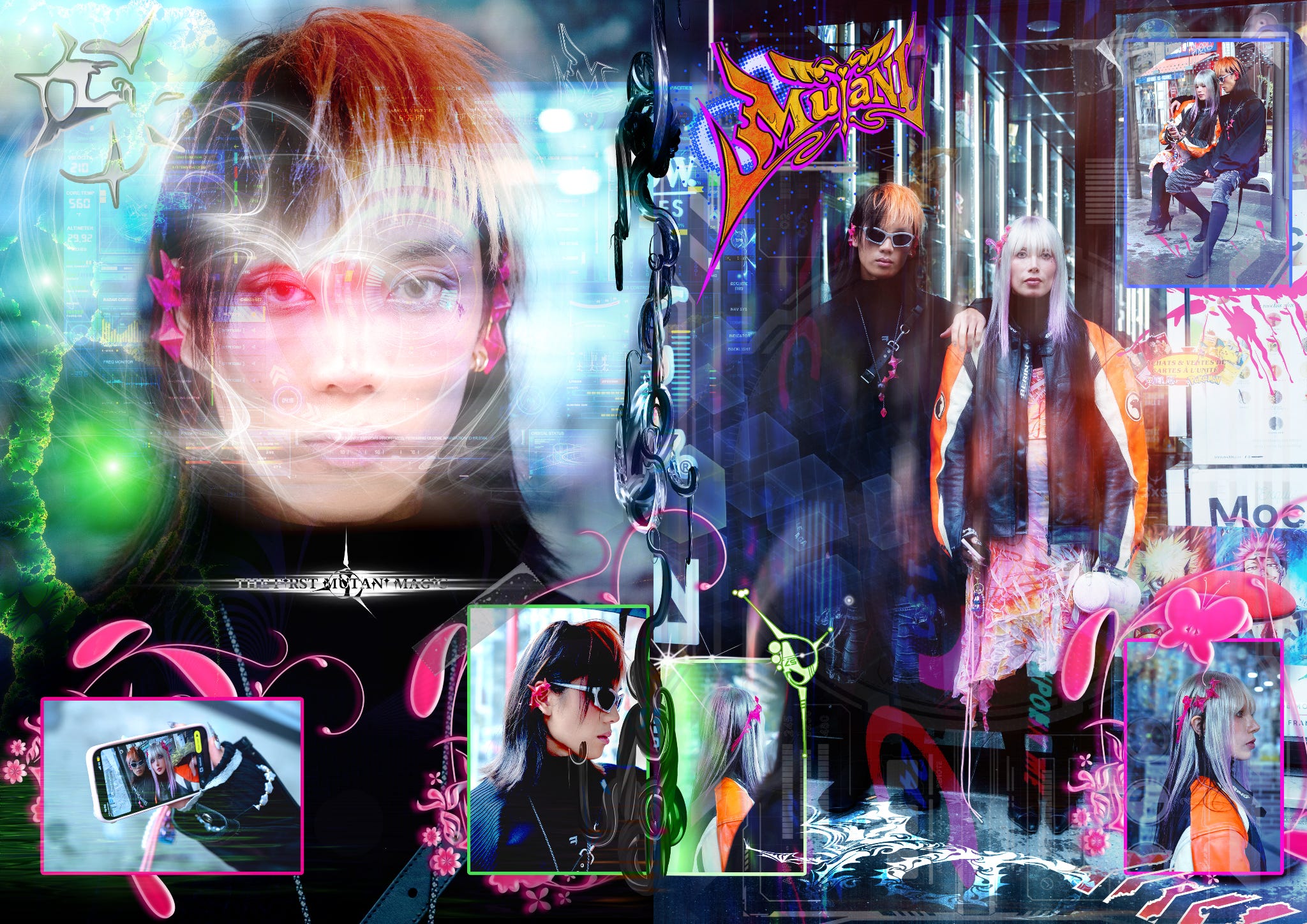
Many walks of life are leaning into this phenomenon. But most noticeably across Twitch, TikTok and YouTube, it’s the non-male gamers who are really leading the charge here. These days, 46% of gamers in the US are female according to the Entertainment Software Association (ESA). And while only 1% of gamers claim to be non-binary - they’re clearly present within the codified cosplay space. Taking the gendered character out of cosplay and inserting their own presents a safe and exciting place to experiment. Communities like Mutani are particularly strong with over half identifying as LGBTQIA+.
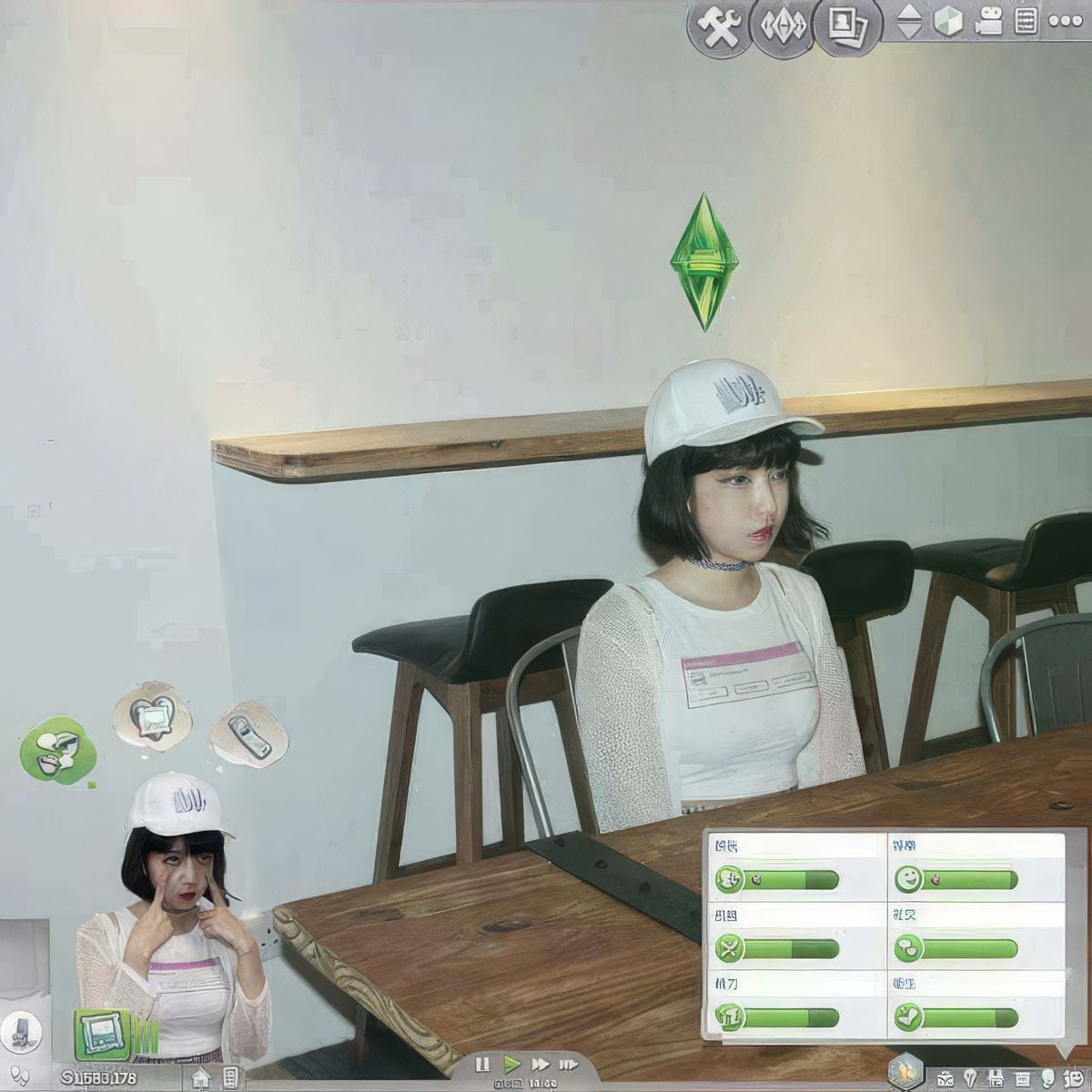
The Age Of Codified Cosplay has many forces to thank for its existence. One that can’t go unmentioned is the life simulation classic, The Sims. This is a game that ushered many non-males into gaming, where no one protagonist reigned. Rather, it was made up of a collection of quirky avatars invented by the player. This began to teach gamers that they could project themselves onto their games – imagining their own storylines.
Then came the Nintendo DS – a console that took the non-male market by storm. Novel game formats in beauty and fashion found their way onto the DS, opening up a new style of play. Games like Style Savvy, Sally’s Salon and many others were hyper-targeted towards a growing demographic of gamers that wanted to style avatars from the ground up – no AAA character arc, just personal curation. The Nintendo DS became a literal canvas of expression itself, with many bedazzling and sticker slapping their consoles to mimic something of a trinket or accessory that dangled from bags and sat by make up dressers.
The Nintendo DS became a vessel for individuality, both through form and function - training a new generation of gamers not to mimic their game characters, but to morph them into something for themselves. The screen was less portal, more mirror.
As the barriers for gaming began to break down and the stigma behind who plays games diluted, the communities that grew up on these simulation games and cosy consoles also began playing other gaming classics like Final Fantasy and Resident Evil with more concrete characters.
The ongoing mix of these gaming experiences pulls us into The Age of Codified Cosplay. Sitting at the juncture between character-as-me driven games (i.e. Animal Crossing, Nintendogs) and character-as-them games (i.e. The Legend Of Zelda: Phantom Hour, Kirby: Super Star Ultra) – cosplay is becoming codified, borrowing from iconic characters to create idiosyncratic looks.
The Horror Game Girl movement on TikTok represents this better than anything. The white faced, deep eyed, softly illuminated horror protagonists of games like Silent Hill, Alice: Madness Returns and Fatal Frame become muses for new beauty expressions. Creators like @Merveystar use these visual cues not to mimic characters, but to channel the emotional syntax of survival horror: trauma, beauty, fear, and defiance, rendered through blush placement and contour. The Horror Game Girl’s face is not about being scared, it’s about being seen through the static. In this codified mode of cosplay, lashes are thick enough to cast their own shadows, eyes are rimmed with an alluring exhaustion – the energy is distorted yet personal, beautiful yet glitchy.
 Tiktok failed to load.
Enable 3rd party cookies or use another browser
This same energy courses through GODMODE, the new beauty brand from Rina Sawayama and Chloë Grace Moretz. Unlike the countless celebrity lines before it, GODMODE doesn’t sell products as extensions of the founders’ egos. Instead, it offers a shared sandbox: both Rina and Chloë have built characters within the GODMODE universe, but everyone who wears it is invited to invent their own. It’s beauty as gameplay, a brand built not on mimicry but modding. The first drop — Genesis Glow highlighter (in an egg-shaped metallic casing), is designed to make your face look like it’s emanating from screen glow. The Genesis Glow embodies codified cosplay perfectly. Rather than pulling from any particular character, it pulls from the esoteric experience of gaming in a blue light bath, and turns it into beauty.
The Merge of Mirror and Monitor.
The Age of Codified Cosplay isn’t about escape; it’s about return. What started with titles like The Sims — those early games of self-projection — has evolved into something sharper, more self-aware. The same players who once styled avatars on the Nintendo DS are now styling themselves with the same intent. The tools have changed, but the instinct hasn’t.
The Horror Game Girl takes the petrified look and gives it an everyday platform. GODMODE turns foundation into a form of code, a character builder for the real world. Each of these moments reflects the same impulse: to see ourselves more clearly by remixing the unreal.
The mirror and the monitor are finally one surface. In this age of codified cosplay, we’re no longer asking how to look like game characters. We’re learning how to become our own.