

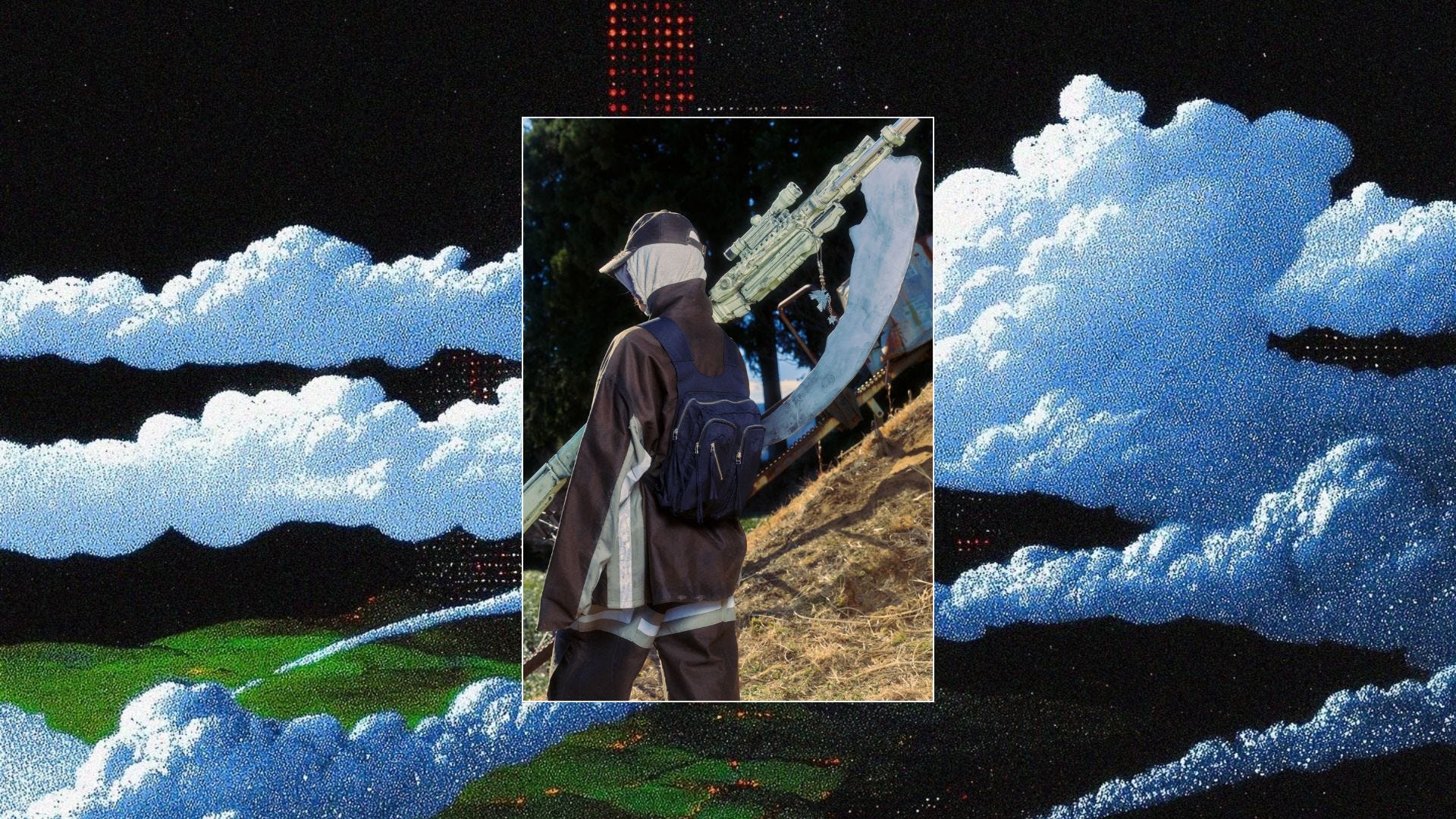
Fashion has always sold us a character. A suit promises success. Underwear promises sex appeal. Get dressed and unlock a new version of yourself, even if your only quest is a Tesco meal deal on a Tuesday evening. For that one, we recommend equipping more than underwear.
But fashion’s current fascination with role-playing games (RPGs) goes deeper than dressing like a character. RPGs ask what happens to that character after they get dressed.
In games like Final Fantasy, Fallout and Pokémon, the person or creature you start with rarely resembles the one you finish with. They gain abilities, make questionable decisions and survive things they probably shouldn’t have. Along the way we fill up something called an “inventory log,” with items that are ever changing. A sword might enter a dungeon as basic equipment and leave it upgraded, battle-worn and impossible to replace emotionally.
That is what makes the RPG such a compelling reference for fashion.
It gives designers a language for clothes that can acquire meaning, bodies that can be reconfigured and worlds that extend beyond a single collection.
A generation raised on RPGs is bringing that logic into fashion. You can see it across the world from South Korea’s FFFPOSTALSERVICE to Paris’ Rohan Mirza. Three creatives, though, are playing on expert mode: YAKU builds the quests, Kai Ghattaura considers what happens to clothes inside it, and EOMZIE builds her character one equipment slot at a time.
Speaking with J’Nae Phillips from Fashion Tingz, she agrees:
“From a fashion perspective, I think what feels most exciting here is the shift from clothing as a finished object to clothing as a form of progression. We’re increasingly seeing designers treat garments less like static statements and more like pieces of a character’s evolving identity — layered, customised, collected, upgraded and sometimes deliberately worn out. In that sense, the RPG isn’t just a visual reference; it mirrors how younger generations actually think about getting dressed. Your wardrobe becomes an inventory, styling becomes world-building, and every piece can signal where your character has been and where they’re going next. Fashion has always been about constructing identity, but RPG logic gives that process a new vocabulary… one where the outfit is never really finished.”
Make some room in your inventory. These are worth picking up.
YAKU: Collection as revolving quests
Yaku Stapleton’s label YAKU treats new collections as new quests for his ongoing universe: The ImPossible Family Reunion in RPG Space. Members of his family are reimagined as characters in a story that unfolds from season-to-season. The clothes belong to that story, alongside its settings, props, performances and character histories. Fashion week becomes a way to enter the world for a while.
For AW25, the family occupied Tutorial Island, a training ground familiar to anyone who has played RuneScape and spent their first hour learning which button does what. YAKU’s version contained a library, a forest, swordplay and moments of self-reflection. SS26, titled A Ground to Stand On, took them into a wider world and drew on histories of pre-colonial Caribbean resistance. AW26’s Evolution of Combat then followed two brothers whose identities begin to diverge under pressure. Every collection, a new quest. “What draws me towards YAKU’s work is how he turns the collection cycle into something closer to character development than seasonal product delivery, which creates a much richer relationship between the wearer and the clothes: you’re not simply buying into a look, you’re entering a chapter of a world that already has memory, mythology and consequence,” says Phillips.
Each collection, YAKU draws in references from the games he was inspired by like BioShock, Die Hard and Soul Calibur. Fabric swords, axes and pics stay fastened to shorts or hang from bags. Reptilian-like adornments and prints line the chests and spines of jackets and hoodies. Wearing each collection of YAKU’s feels like unlocking a new set of skins in some expansion pack. He then weaves in unexpected items like Wiimote Swords, oversized GameCube’s and spikey skinned Game Boy Advance’s that are akin to secret unlocks you might find on a side quest.
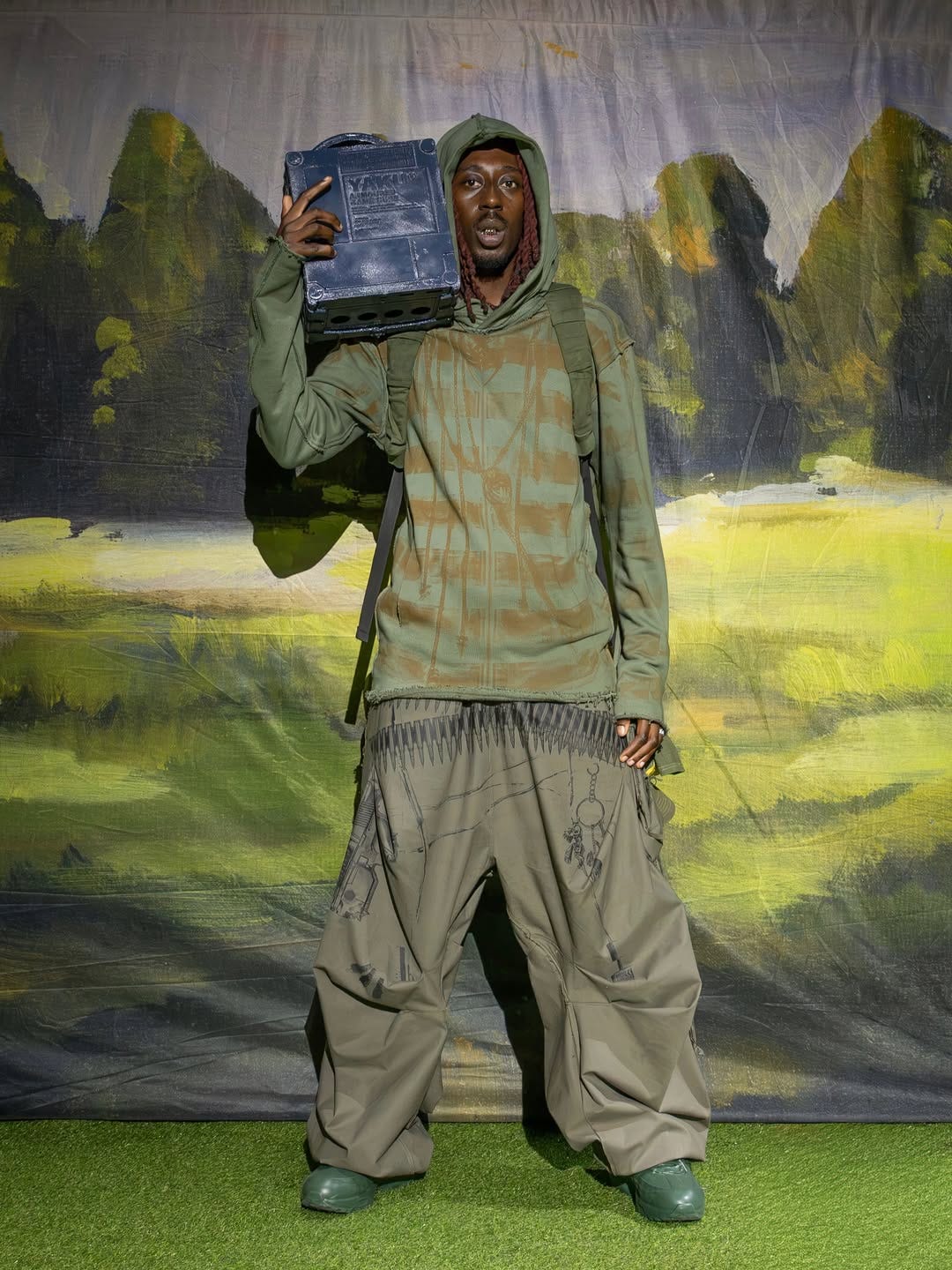
YAKU uses the seasonal fashion calendar to do what an RPG does well: let a world change as its characters encounter it. The clothes gain context from what came before. A piece from Tutorial Island and a piece from Evolution of Combat may share a visual language.
But they belong to different save points in the characters’ lives. “The idea of garments carrying different “save points” challenges fashion’s obsession with newness, as each collection doesn’t have to replace the last. Instead, it can add another layer to it. YAKU is using the fashion calendar less as a commercial deadline and more as a narrative device, allowing clothes to accumulate meaning as the universe evolves.”
Kai Ghattaura: Clothes that evolve with gameplay
Where YAKU builds quests around the garment, Kai Ghattaura’s garments change based on the quests they’ve been on. The designer has long embraced wear, damage and transformation in his clothes. They are made to fray, tear and collect evidence of use, allowing the wearer to participate in how a piece eventually looks. It mimics the mechanics of popular games like Final Fantasy XIV, where items deteriorate and change from use.
Ghattaura’s earlier show A Scattered Dream sent models through the space in distressed, mud-smeared garments, carrying swords and gauntlets. Medieval grime collided with very online jokes, including a concrete crying-laughing emoji handbag. His February 2026 MA collection, Seminomadic, pushed his interest in improvised, travelling silhouettes through upturned pike shoes, wrapped fabric, elaborate headwear and long textile trails. Ghattaura has named Minecraft, Kingdom Hearts and Final Fantasy among the games he played growing up – and it’s no surprise.
What connects these projects is a willingness to let clothes look as though something has happened. Ghattaura’s work has room for dirt, humour and the wearer’s own bad decisions. “So much of contemporary fashion is built around preserving an image (the perfect finish, the perfect styling, the perfect campaign), whereas his clothes are more interesting because they are lived in. The damage isn’t a flaw in the garment; it’s a form of authorship shared between designer and wearer,” says Phillips.
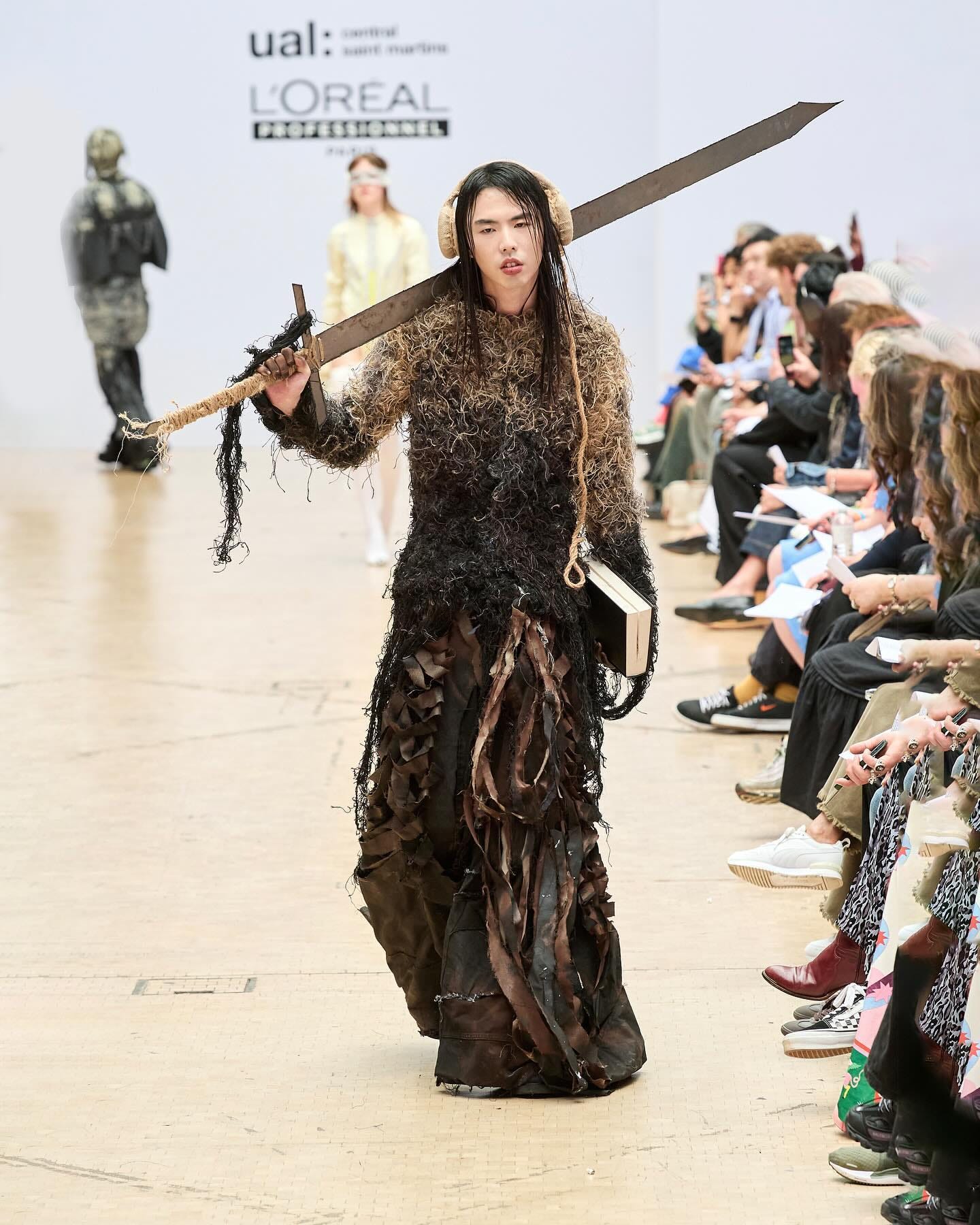
Once a piece leaves the studio, its story can progress without him. “Ghattaura makes a compelling case for fashion that gets better when something actually happens to it.”
EOMZIE: Build the character, piece by piece
EOMZIE, also known as EZ, takes the idea of character-building somewhere more bodily. The South-Korea-born artist and model describes herself as a “mecha doll,” a persona that brings together her physical body and digital identity. Her practice moves through augmented reality, costume and wearable objects, with each new element offering another way to construct that character. “EOMZIE’s work taps into something fundamental about why we dress in the first place: the body is never as fixed as it appears.”
Wing rigs, masks, armour and weapon-like accessories can feel as though they have been added to the equipment menu over time as EZ’s character moves through her own game. A crystalline gauntlet changes the arm beneath it; a wing rig changes the shape of the entire body. These are objects with the visual weight of tools, even when their purpose is expressive rather than practical.
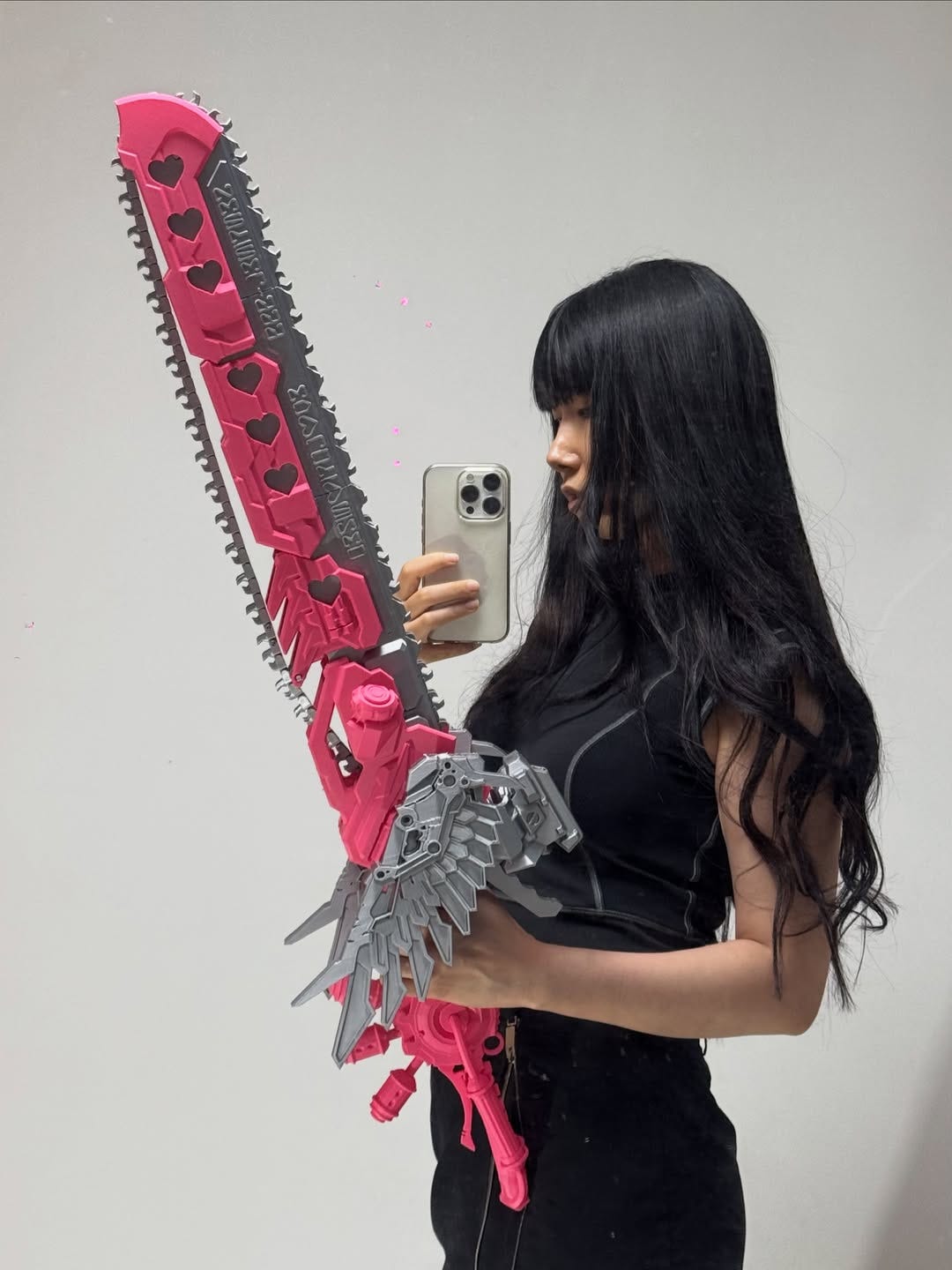
EOMZIE’s influences extend well beyond RPGs, particularly into anime, film and cyborg imagery. That breadth is part of what makes her work interesting here. She shows how the RPG idea of equipping a character can become a way of thinking about identity in real life. Add an object, alter the silhouette, discover another version of yourself. “EOMZIE’s work suggests that getting dressed can be less about expressing who you already are and more about building who you might become.”
Save the build, then change it again.
Why are RPG’s a thing now?
Gaming language has already escaped the screen. We go on “side quests,” call people “NPCs” and try to “maxx” various parts of our lives. We have become fluent in the terms, whether or not we’ve ever spent a weekend trudging through an open-world-RPG.
The work of YAKU, Ghattaura and EOMZIE suggests an interest in what comes after the vocabulary. Each treats identity as something that develops through action. YAKU’s collections evolve with every new quest. Ghattaura’s garments change through wear. EOMZIE assembles and revises a body that can exist both on screen and off it.
RPGs offer fashion a compelling thought: the most interesting version of a character is rarely the one you meet at the start.
Maybe the same is true of an outfit. You acquire it, you live in it, you damage it, you add to it. Eventually, it starts to look like something only you could have made.