

If you’re looking for a shorter take, here’s the TL;DR. For all those looking to go deep, you’ve come to the right place!
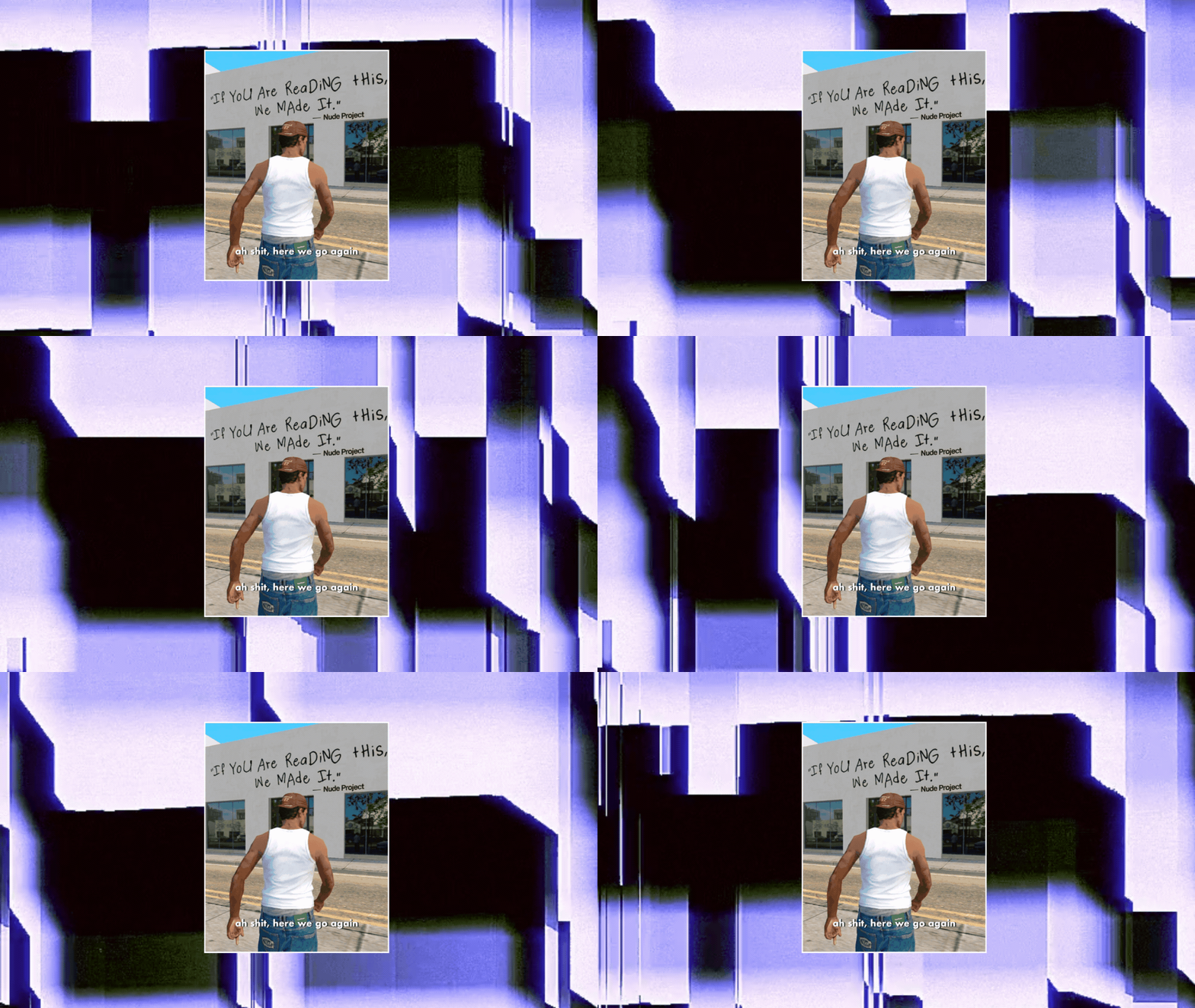
Cult fashion brand, Nude Project, had their store opening in LA last month. But instead of giving us the typical slate of high res store visuals, they kinda went the opposite way. Everything got rendered through a low poly gaming filter as a nod to Grand Theft Auto: San Andreas – a game that’s heavily inspired by the antics of coastal-Cali-culture. Coinbase did something similar for their “Your Way Out” ad – where they designed an entire story, set and cast of characters via a low poly lens. What’s going on here?
There was a time when video games were treated as a break from real life. You clocked off, loaded in, escaped the day and became someone else for a while. A plumber with a red hat. An elf with a mythical sword. A Sim trapped in a house with no doors because someone, somewhere, had a god complex and only 15 minutes left on the family computer before their sibling took over.
But then the pandemic changed all that (I know, “not this again…” but indulge me for a second).
When we couldn’t go outside, we started to live vicariously through the games we played. Avatars became mirrors to the soul. We partied in hyperreal environments. We were building lifestyles in lieu of our own.
When we finally came out of lockdown, games had broken out of the box, latched onto our psyche and started running its own servers. NPC culture began to take over TikTok. Language like “side quest”, “OP (overpowered)” and “loot” continues to pulse through our everyday vernacular. PS1 & 2 covers took over pop music – with the final boss of sorts being A$AP Rocky with his run of bootlegs for Don’t Be Dumb earlier this year.
Games are no longer just places we go to leave reality behind. Increasingly, they are where reality gets rehearsed, styled, glitched, performed and then exported back into the world.
But why?
We No Longer Want Our Avatars To Be Like Us, We Want To Be Like Them
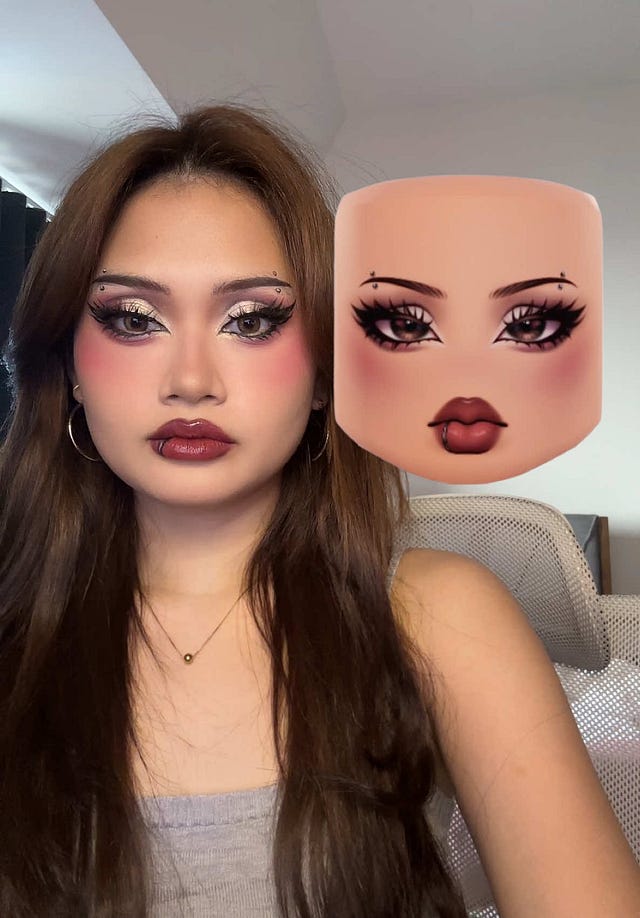
For years, avatars were about representation. It was about making a digital version of yourself. Pick the hair. Pick the face. Pick the outfit. Try to get the nose vaguely right, fail, accept your fate, learn to love it and move on. Now, the relationship has flipped. Avatars are not just mirrors. They are aspiration engines.
Roblox found that 84% of Gen Z say their physical style is at least somewhat inspired by what avatars wear, while 54% say they are very or extremely inspired. In other words, the avatar is no longer simply reflecting the player. The player is starting to chase the avatar.
 Tiktok failed to load.
Enable 3rd party cookies or use another browser
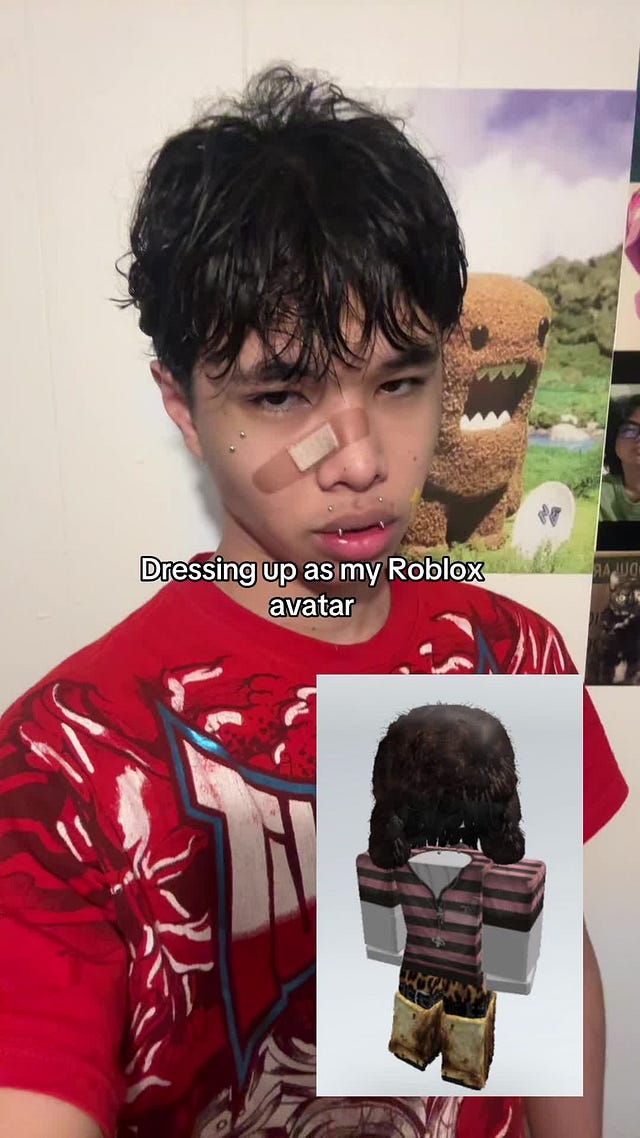
Nowadays, we’re looking at the avatar to guide us. 87% of Roblox players feel more comfortable expressing themselves in real life after experiencing it in immersive digital spaces.
Games have become low-risk testing grounds for identity. Players can try on aesthetics before they try them on physically. The avatar becomes the first draft of the self.
 Tiktok failed to load.
Enable 3rd party cookies or use another browser
That’s why this shift is bigger than digital fashion. It speaks to a new order of taste formation. Young people are not only being influenced by celebrities, stylists, magazines or TikTok creators. They are being influenced by their own playable alter egos.
In Our Picture Perfect World Of AI, Games Offer Charming Clunkiness
We are living through an era of synthetic polish. AI images are getting smoother, cleaner and more suspiciously perfect by the week. We’re looksmaxxing in a world that’s hyperfocused on the screen and the currency it gives to our face. We’re swapping out real meals for processed Huel shakes to make sure we hit our protein and vitamin goals in one monstrous gulp.
Against that, certain games can offer something oddly precious: jank.
Glitches. Lag. Low-res textures. NPCs walking into walls. Characters speaking in nonsense. I’m talking about The Sims, Tomodachi Life, Runescape, Steal A Brainrot on Roblox or even a recently modded version of Skyrim that probably should’ve stayed buried in some niche sub-Reddit.
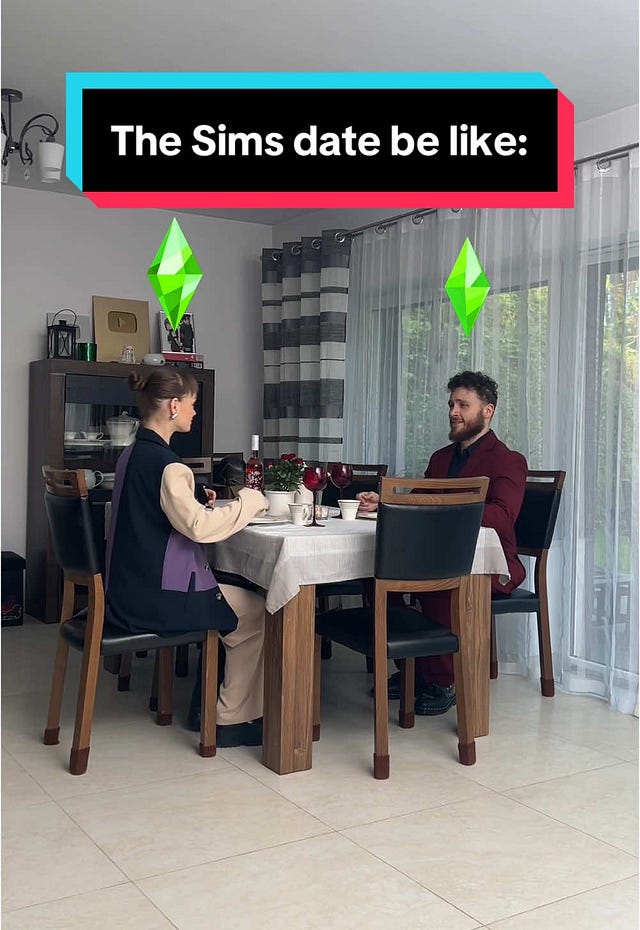
The Sims rules the roost here. A keen community of “Simstagrammers” can be seen across social media trying to recreate scenes and scenarios that could only ever take place in a game like this. In fact, 75% of Sims fans go to TikTok for just this. The appeal of The Sims has never just been that it lets us simulate life. It is that it lets us simulate life badly, beautifully and absurdly.
 Tiktok failed to load.
Enable 3rd party cookies or use another browser
That awkwardness is becoming culturally valuable because it cuts against the sterile perfection of our feeds. In a world where everything is being made smoother, games remind us that rough edges are often where the personality lives.
Retro Gaming Is Becoming A Creative Canvas As Slow Tech Returns
Retro gaming is having a new kind of moment. Not just as nostalgia, but as an aesthetic resource. Old consoles, cartridges, clamshell devices and pixelated characters are being revalued as design objects. A recent report by Backmarket found that 25% of recent retro console purchases in the UK are being bought for aesthetic appeal.
But it’s not just the consoles that are coming back, the old characters are coming along with them as well. Cooking Mama is not just a DS character. She is a domestic icon with Y2K kitchen finesse. These niche gaming references feel newly stylish.
 Tiktok failed to load.
Enable 3rd party cookies or use another browser
Cooking Mama, PaRappa, Nintendogs, WarioWare, Mii avatars, Wii Sports instructors, Pokémon sprites all belong to a shared memory bank. They are not obvious “fashion references” in the traditional sense, which is exactly why they feel fresh. They come from the strange corners of childhood culture, the bits that were never supposed to become moodboards.
Retro gaming has become a creative canvas because it offers a visual language full of friction, humour and emotional residue.
Games Are No Longer Games, They’re Social Infrastructure
The phrase “video game” now feels slightly inadequate. It is like calling a nightclub “a room with speakers.” Practically true. Spiritually useless. Games are now places where people hang out, shop, attend concerts, watch previews, meet artists, roleplay, dress up and build communities. What was once IRL-only is increasingly happening in between.
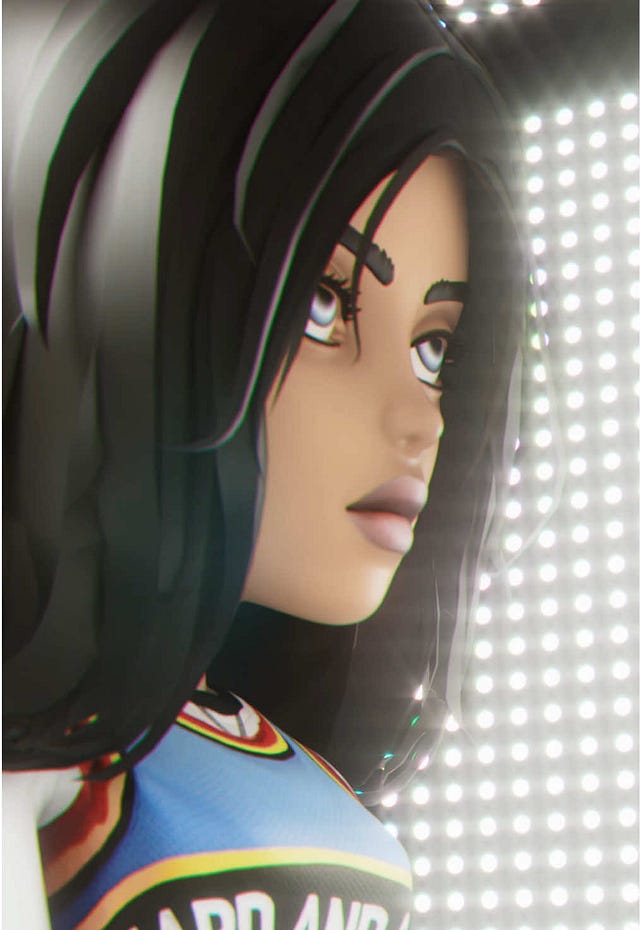
Concerts are particularly hot with Gen Z with 38% saying they find virtual concerts and exciting ways to engage with music. Billie Eilish recently used Roblox’s The Block as an extension of her Hit Me Hard and Soft tour world, with fans able to enter a virtual recreation of her performance setting and interact inside the environment. KATSEYE have also used The Block for an interactive fan Q&A, showing how Roblox is becoming less like a single game and more like a persistent entertainment venue.
 Tiktok failed to load.
Enable 3rd party cookies or use another browser
You don’t always log in to win. Sometimes you log in to be seen. To try on an outfit. To catch a moment. To hang out with friends. To feel part of a release, a tour, a fandom or a world. This is why gaming has become so attractive to music, fashion and entertainment. These worlds don’t just broadcast culture. They let people inhabit it
Video Game Paraphernalia Has Become IRL Cultural Souvenirs
As gaming culture spills into the real world, it is not only the games themselves that matter. It is the stuff around them. Controllers. Cases. Cover art. Bootleg figures. Memory cards. These are becoming cultural souvenirs, pulled from the console and remade as objects people can own, wear, collect or display.
Now we have up and coming designers like Yaku turning retro accessories into cultural collectibles. Over the last months, he has turned Wii-mote’s into swords and Game Boy Advance’s into their own spikey characters. In the football realm, we’ve seen A Store Like 94 transform the magic of Pro Evolution Soccer into collectible figurines.
This kind of work understands that old games were not just entertainment. They were emotional archives. That is why gaming paraphernalia is becoming collectable. These objects are not simply props. They are portals. They carry the atmosphere around the game, not just the game itself.
Games Have Become Cultures Most Flexible Reality Engine.
Real life now feels increasingly mediated, curated and algorithmic, while games feel strangely alive: social, expressive, imperfect, playful and full of objects people actually care about.
This is the strange inversion at the heart of it all. Games were once dismissed as artificial worlds, yet now they often feel more real than the platforms built to document reality. You can build. Dress up. perform. fail. glitch. collect. wander. gather. become. The grammar of gaming is active, not passive. That is why it keeps leaking into everything else.
The old cliché was that games let us escape from reality. Now games are escaping into reality.